Type
Religious Building
Location
Krastë, Elbasan
Year
2021
Phase
Project Idea
KRASTE MOSQUE, ELBASAN
The design objective was to create a socio-cultural landmark for the village of Mohor Para, aligning with the client’s aspirations and the community’s
requirements. The client’s vision encompassed not only the noble purpose of enlightening the community about Islam but also the creation of a socio-cultural haven where individuals could gather, with the Mosque acting as the catalyst for growth and progress. The architectural composition of
the mosque is deeply rooted in tradition, while simultaneously embracing a contemporary approach in terms of materials and technology. This harmonious blend aims to propel the villagers towards intellectual and spiritual growth. In this contemporary epoch characterized by a prevalent
misinterpretation of Islam, careful activities have been undertaken to materialize an authentic Islamic ideology and educational framework that fosters increased empathy towards all religious beliefs.
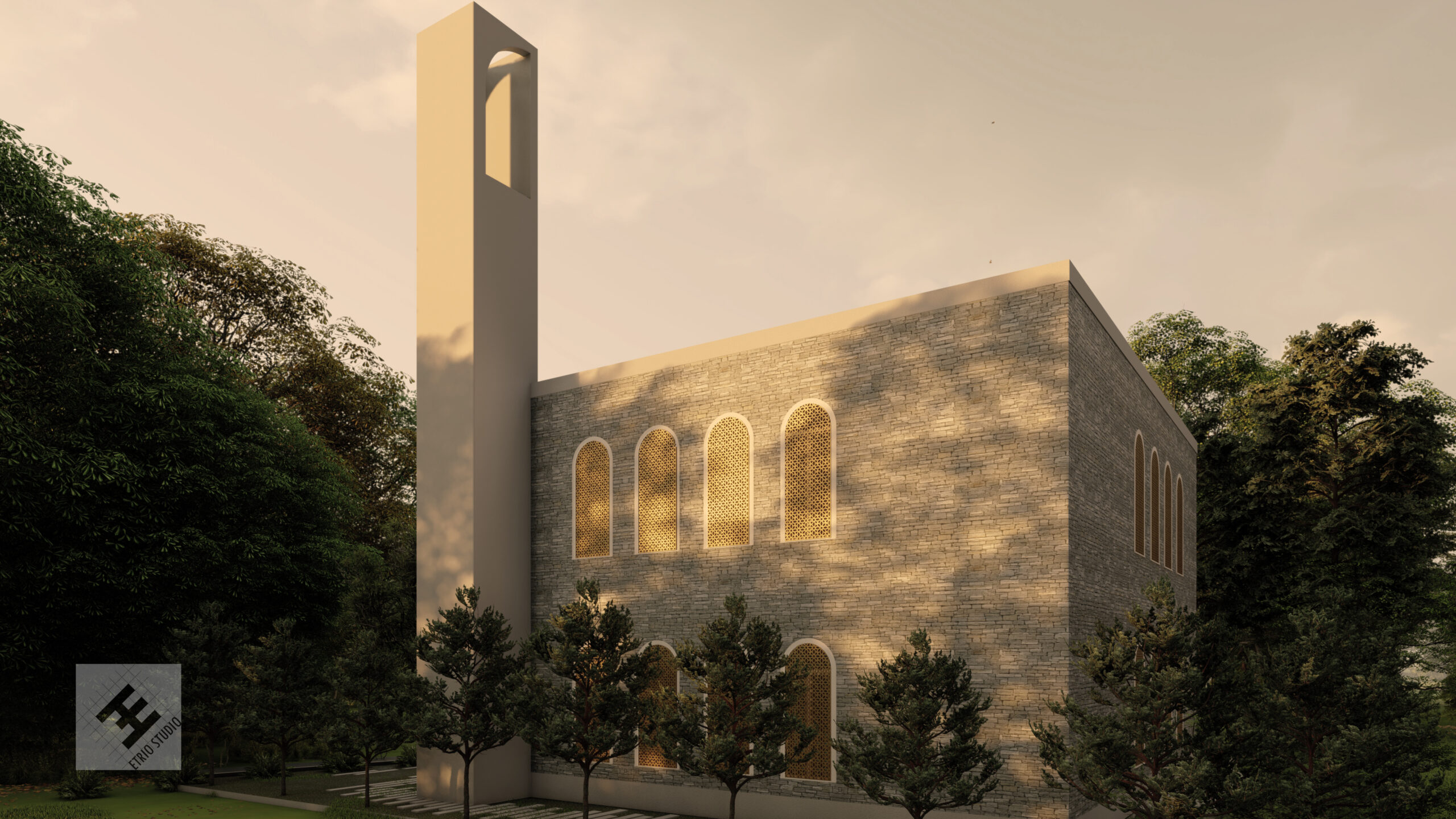
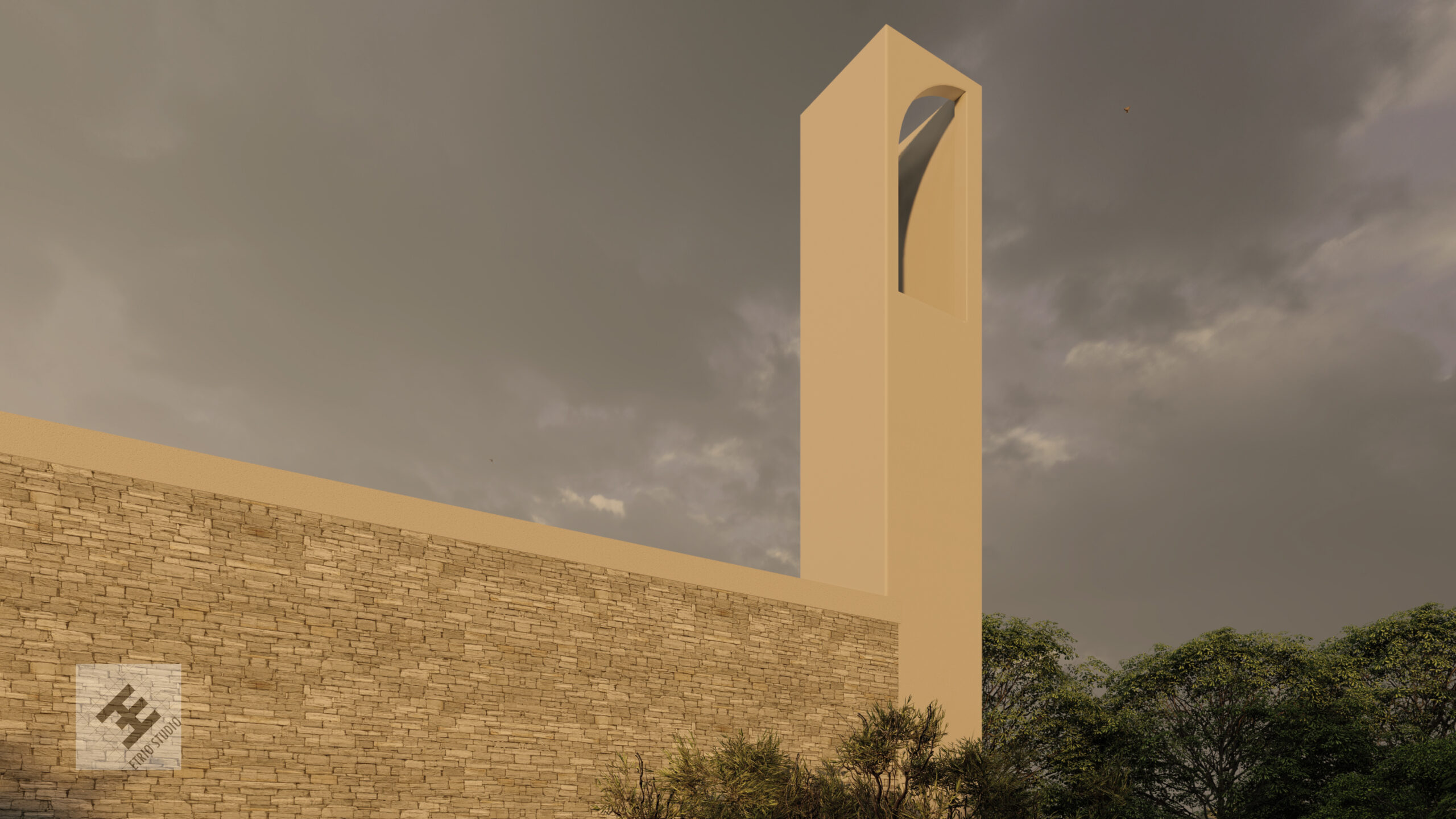
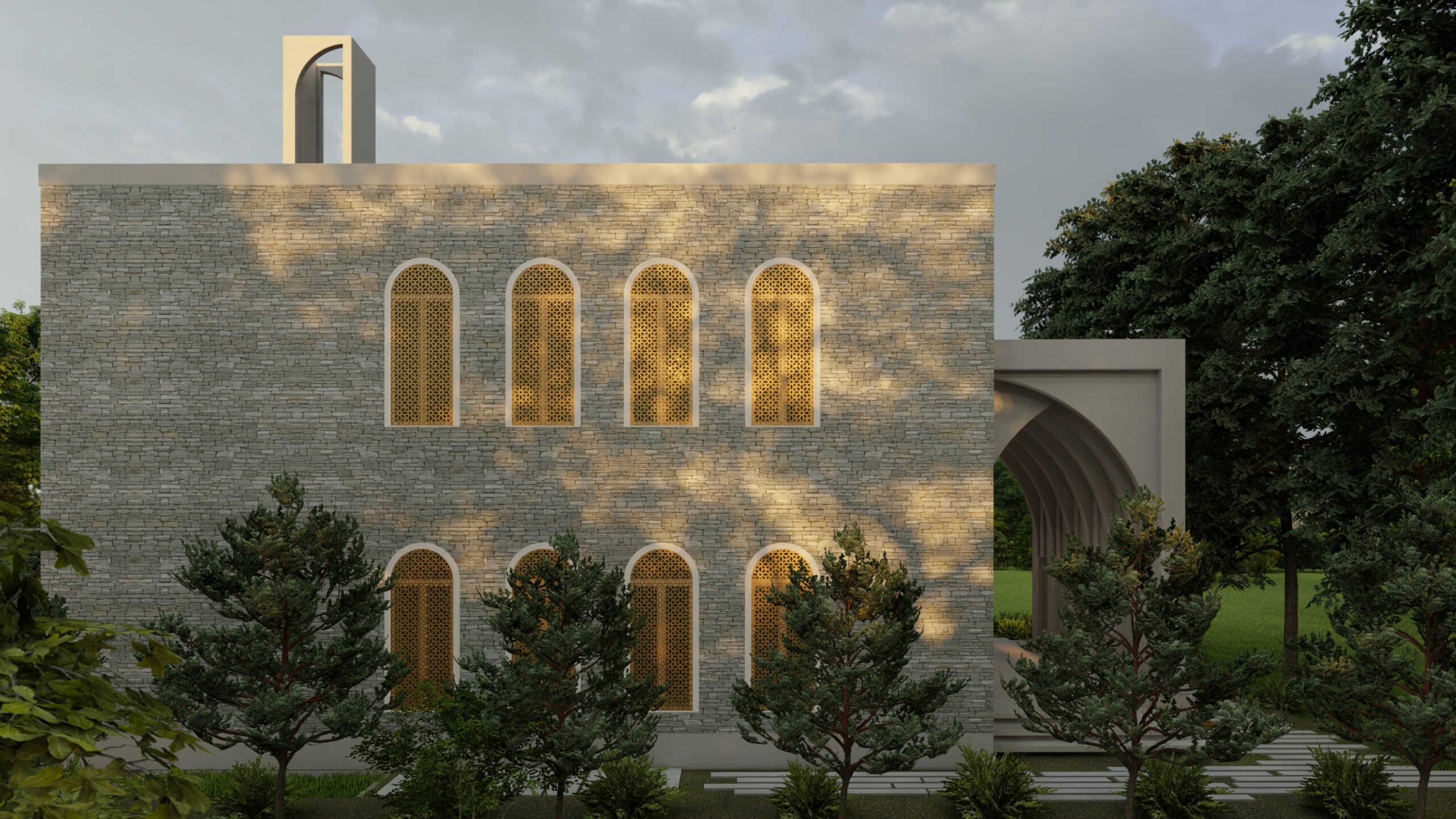
The design of the mosque envisions it as a luminous light placed within an abundant landscape, casting its spiritual radiance upon Krasta and the surrounding areas. The striking and elegant massive exterior attracts both worshippers and pedestrians throughout the course of the day. During the nocturnal hours, the mosque’s inherent transparency due to the lights of the main elements.
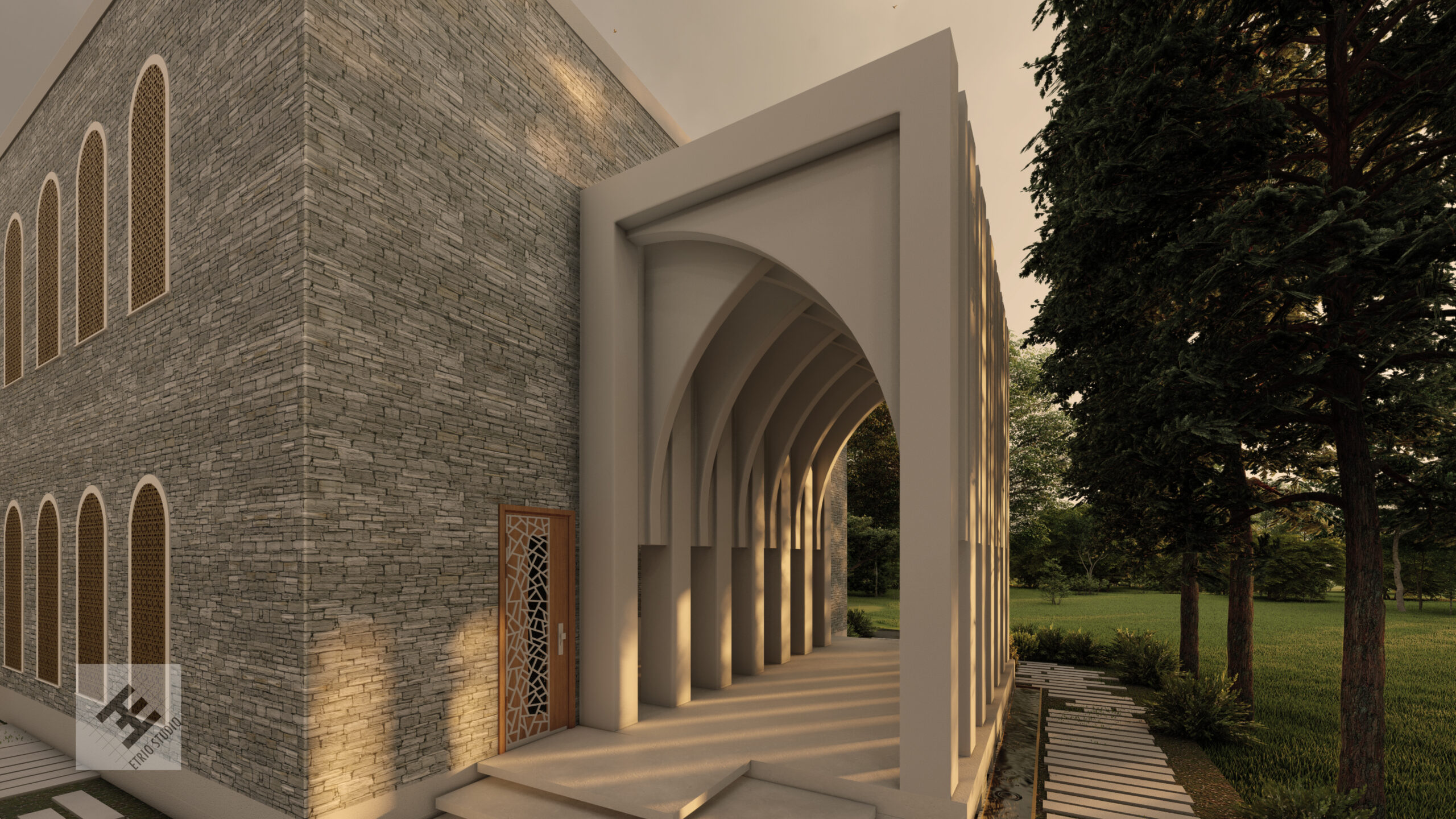
The Kraste Mosque exhibits a modest physical size, yet exudes a grandiose essence. The design of this Mosque draws inspiration from the timeless elements of traditional Central Albanian mosques, such as the elevated prayer halls and gracefully arched facades of the front room . These elements are seamlessly integrated into a contemporary architectural language, resulting in a harmonious fusion of tradition and modernity.
The overlapping of the previously utilized curves within the mosque hall generates a visually attracting composition that evokes a sense of progressive unity. This arrangement exhibits a sharp arc-like form, in which the curves interconnect entirely within the context of spatial, temporal, and visual dimensions. The structure symbolizes the ethereal bond between believers and the Creator; Their eternal confidence in the intangible and the Omnipotent amidst the rural environment.